
In demanding industrial environments, equipment reliability is the foundation of productivity. Forklifts operate under constant pressure—handling heavy loads, navigating tight spaces, and working across multiple shifts. One of the most critical yet often underestimated components is the tire. Exclusive forklift solid tires are engineered to meet these challenges, offering enhanced durability, stability, and long-term value.
This article explores forklift solid tires from a performance and lifecycle perspective, helping businesses understand how to maximize efficiency while minimizing operational risks.
What Defines Exclusive Forklift Solid Tires
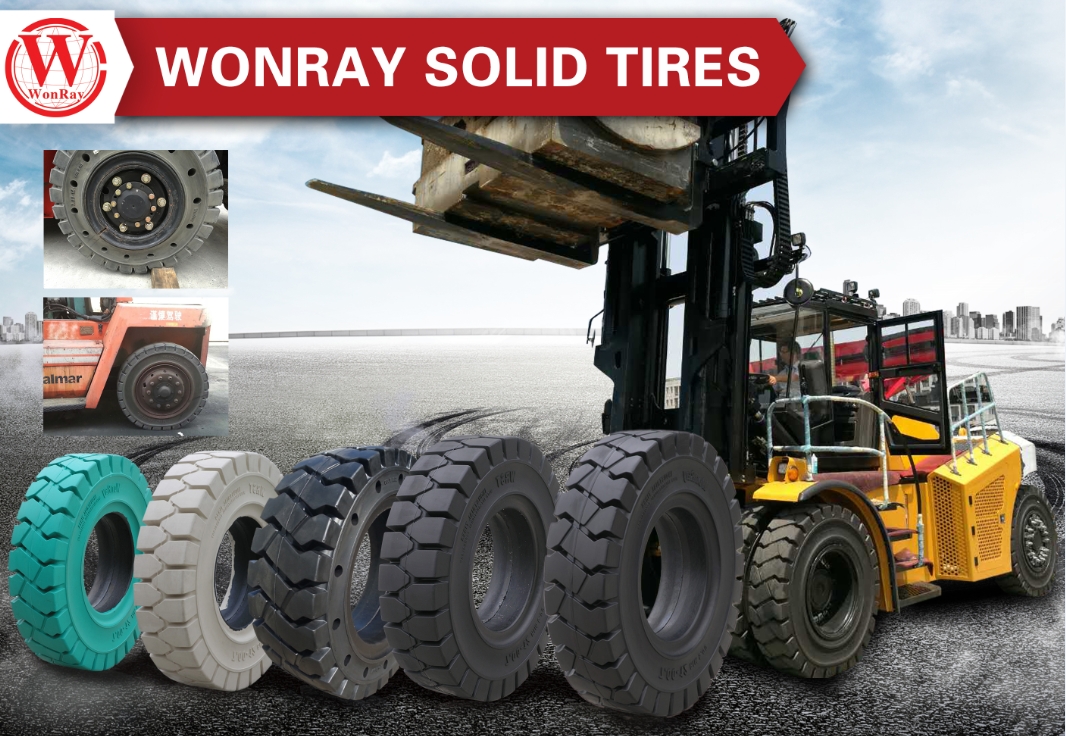
Exclusive forklift solid tires are not standard solid tires—they are engineered with advanced rubber compounds, reinforced internal structures, and optimized tread designs tailored for intensive industrial use.
Unlike pneumatic tires, which rely on air pressure, solid tires are completely air-free. This eliminates common issues such as punctures, pressure loss, and sudden tire failure. High-end solid tires often incorporate multi-layer technology, combining wear resistance, shock absorption, and structural strength into one integrated design.
These features make them particularly suitable for environments where equipment must perform consistently without interruption.
Advanced Durability for High-Intensity Workloads
Durability is the primary advantage of exclusive forklift solid tires. In environments where sharp debris, heavy loads, and continuous operation are common, tire failure can severely disrupt workflow.
Exclusive solid tires address this by offering:
● Resistance to cuts, punctures, and tearing
● High wear resistance under constant friction
● Long service life even in multi-shift operations
● Stable performance across different load conditions
For businesses, this means fewer replacements and reduced maintenance intervention, leading to more predictable operating costs.
Stability That Enhances Operational Safety
Handling heavy loads requires more than just strength—it requires balance and control. Exclusive forklift solid tires provide a firm and consistent contact surface, improving equipment stability during lifting and transport.
This results in:
● Reduced risk of tipping during high-load operations
● Improved balance when operating at height
● More controlled movement in confined spaces
● Increased operator confidence and safety
In high-density warehouses or busy industrial facilities, these stability improvements play a critical role in accident prevention.
Traction Optimization for Diverse Surfaces
Modern forklift operations often involve different floor types, from polished concrete to outdoor asphalt areas. Exclusive solid tires are designed with specialized tread patterns and compounds to maximize traction.
They provide:
● Strong grip on smooth indoor floors
● Reliable traction on slightly uneven surfaces
● Reduced slippage in wet or oily conditions
● Consistent handling performance across environments
Improved traction not only enhances safety but also increases efficiency by allowing smoother acceleration and braking.
Lower Total Cost of Ownership
While exclusive forklift solid tires may require a higher initial investment, their long-term economic benefits are significant.
● Minimal maintenance requirements reduce labor costs
● Extended lifespan lowers replacement frequency
● Reduced downtime prevents productivity losses
● Lower risk of unexpected failures decreases repair expenses
When evaluated over the full lifecycle, these tires offer a strong return on investment, especially in high-usage environments.
Ideal Applications for Exclusive Solid Tires
Exclusive forklift solid tires are best suited for industries where reliability and durability are critical.
● Warehousing and logistics with high equipment utilization
● Manufacturing plants with continuous material flow
● Ports and terminals handling heavy cargo
● Recycling facilities with sharp debris exposure
● Industrial yards with intensive daily operations
In these applications, the ability to operate without interruption provides a clear competitive advantage.
Key Considerations When Selecting Solid Tires
To achieve optimal performance, businesses should consider several factors before selecting forklift solid tires.
● Load capacity must match operational requirements
● Tire compound should align with floor conditions
● Tread design should suit traction needs
● Operating intensity determines durability requirements
Selecting the right combination ensures maximum performance and longevity.
Product Selection Recommendations
For companies aiming to enhance durability and operational efficiency, investing in premium forklift solid tires is a strategic decision. Look for products that feature reinforced construction, advanced rubber formulations, and proven industrial performance.
Partnering with experienced suppliers can provide access to customized solutions tailored to specific forklift models and working environments, ensuring better results and long-term reliability.
FAQ
Q1: What makes exclusive forklift solid tires different from standard solid tires?
Exclusive versions typically feature enhanced materials, improved structural design, and better performance in high-intensity applications.
Q2: Are solid tires suitable for both indoor and outdoor use?
They perform best in indoor and controlled environments but can also be used outdoors depending on surface conditions.
Q3: How do solid tires impact forklift performance?
They improve stability, reduce downtime, and ensure consistent handling, all of which enhance overall efficiency.
Q4: Do solid tires require regular maintenance?
No, they require minimal maintenance compared to pneumatic tires, making them easier to manage.
Conclusion
Exclusive forklift solid tires represent a high-performance solution for modern industrial operations. By combining durability, stability, and low maintenance, they help businesses achieve higher efficiency and reduced operational risk.
For companies operating in demanding environments, upgrading to exclusive solid tires is not just a technical improvement—it is a strategic investment in long-term productivity and cost control.
Post time: 27-03-2026