
Coal mine dump trucks rarely operate under one consistent condition. A typical shift may include loading, carrying material along haul roads, maneuvering at dumping points, and returning without a load. Each stage creates different demands on the tires. Choosing Coal Mine Dump Truck Tires therefore requires more than checking the vehicle’s maximum load rating.
Load distribution, route gradient, travel distance, surface condition, operating speed, and cycle frequency all influence tire performance. Evaluating the complete haul cycle helps determine which tire construction is appropriate for the vehicle and its working environment.
How Each Stage of a Haul Cycle Affects Tires
A typical haulage cycle includes loading, loaded travel, dumping, and empty return. The forces acting on the tires change throughout these stages.
Loading: Uneven material distribution can place additional weight on particular wheel positions. Repeated impact during loading may also add stress, especially when material is dropped from excessive heights.
Loaded travel: This stage usually places the greatest sustained load on the tire assembly. The truck must support its own weight and payload while moving along the route. Gradients, surface irregularities, speed, and distance influence tire demands.
Dumping: Approaching an unloading point often involves slowing down, positioning, stopping, and reversing. These movements create steering and braking demands. Uneven ground and sharp debris around the dumping area may also cause impact damage.
Empty return: The truck carries less weight, but the tires continue to experience rolling, steering, and braking forces. Downhill sections may require frequent speed adjustments, creating a different operating pattern from the loaded journey.
These stages should be assessed as one complete cycle. A tire that performs adequately during loaded travel may still face demanding conditions during repeated turns, braking, or travel over damaged surfaces.
Loaded and Empty Travel Create Different Demands
A full payload increases the weight carried by the tire assembly, while an empty vehicle has a different axle-load distribution and handling response.
During loaded travel, selection should reflect the actual load at each wheel position, not just the truck’s rated payload. Material density, loading practices, and the position of the load inside the body can affect weight distribution. Uneven loading may increase the demand on certain tires and influence vehicle stability.
During the empty return, lower weight does not eliminate operating stress. A truck traveling downhill may require repeated speed adjustments, while steering and braking create forces that differ from those during loaded travel.
For this reason, Coal Mine Dump Truck Tires should be evaluated against both directions of travel. Selecting tires only for the heaviest point in the cycle may overlook other conditions that affect performance and service life.
Route Conditions Influence Tire Performance
Two mines may operate similar dump trucks but require different tire solutions because their haul roads differ. Route design and maintenance influence the conditions experienced by the tires.
- Gradient: Uphill travel under load places sustained demands on the tire and drivetrain. Downhill travel increases the importance of controlled speed and braking.
- Turning areas: Tight bends and frequent direction changes create lateral forces. Narrow routes may also increase the risk of tire contact with road edges or obstacles.
- Surface condition: Loose coal, rock fragments, sharp debris, uneven ground, and damaged road sections can increase the risk of cuts, impacts, and irregular wear.
- Travel distance: Longer routes keep tires under operating load for more time. Load, average speed, and cycle frequency become especially important during extended haulage.
- Road maintenance: Poor drainage, accumulated material, and damaged surfaces can affect traction and increase tire stress.
Assess the most demanding sections of the route, not just average conditions. A short, steep, or badly damaged section may create greater tire demands than a longer stretch of smooth road.
Match Tire Construction to the Vehicle Type
The term coal mine dump truck can refer to different equipment. Large surface haul trucks and compact underground mining dump trucks do not necessarily share the same tire requirements.
Large surface haul trucks generally need pneumatic OTR tires engineered for high loads, operating speeds, and the thermal demands of long haul routes. Selection may involve load ratings, heat-management characteristics, tread design, and the manufacturer’s application recommendations.
Underground mining vehicles operate in more confined spaces. Roadway width, turning clearance, ground conditions, and possible contact with rocks or obstacles can influence tire construction. Some underground mining and support vehicles may use specialized solid tires, depending on their design and operating conditions.
| Selection factor | Surface haul trucks | Underground mining vehicles |
|---|---|---|
| Main concerns | High loads, haul distance, and heat | Confined routes, ground conditions, and clearance |
| Route conditions | Longer roads, gradients, and dumping areas | Narrow passages, tight turns, and uneven surfaces |
| Key checks | Load, speed, thermal limits, and approved specifications | Construction, dimensions, load, and wheel compatibility |
A tire designed for an underground support vehicle should not automatically be considered suitable for a large surface haul truck. Confirm the equipment manufacturer’s requirements and the tire’s intended application before selecting a replacement.
Balance Load, Speed, and Operating Temperature
Load capacity alone does not determine whether a tire can support a particular haul cycle. Operating speed and time under load also affect tire temperature, especially during repeated or extended journeys.
For applicable pneumatic OTR tires, the relationship between load and average operating speed is often assessed through TKPH (Ton-Kilometer Per Hour). This measure helps evaluate the thermal demands placed on a tire during operation. The applicable rating and calculation method should be confirmed with the tire manufacturer.
A heavy payload combined with relatively high average speed may create greater thermal demands than a short, slower journey. Continuous operation can also leave less time for tire temperatures to decrease between cycles.
TKPH is not a universal selection measure for every tire construction. Solid tires and other specialized products have their own application limits and operating recommendations. Use the relevant manufacturer’s specifications rather than applying pneumatic OTR ratings to other constructions.
When assessing Coal Mine Dump Truck Tires, record the actual payload, average speed, route length, cycle frequency, and ambient conditions. These details provide a more useful basis for evaluating suitability than vehicle capacity alone.
Use Operating Data to Guide Replacement Decisions
Trucks in the same fleet may follow different routes or perform different tasks. Replacing every tire with an identical specification without reviewing operating conditions can overlook important differences.
A practical assessment should include:
- Vehicle details: Truck model, original tire specification, wheel dimensions, and required load capacity.
- Route details: Loaded and empty travel distances, gradients, turning points, road surfaces, and dumping conditions.
- Operating details: Average speed, daily operating hours, number of haul cycles, and typical payload.
- Tire condition: Wear, visible cuts, impact damage, deformation, and recurring problems.
- Replacement history: Service records from vehicles working under similar conditions, which can reveal patterns linked to particular routes or tasks.
This information helps distinguish a tire-selection issue from an operating or road-maintenance problem. It also reduces the risk of replacing a tire with another product that faces the same unsuitable conditions.
Matching Mining Tire Solutions to the Application
The appropriate tire construction depends on the vehicle, wheel assembly, and working environment. Surface haul trucks and underground mining support vehicles should not be assessed using the same assumptions.
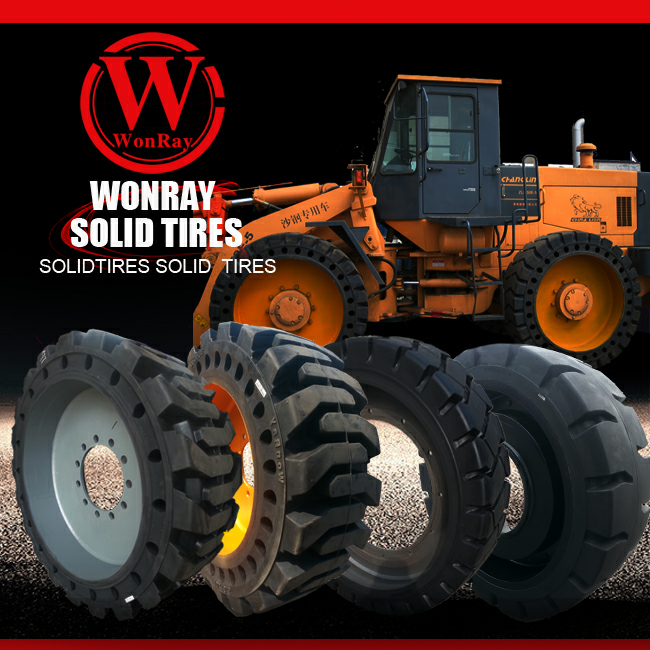
WonRay offers industrial solid tire solutions, including cured-on solid tires for applications such as underground mining machinery and heavy-duty support trucks. For vehicles in these categories, confirm tire dimensions, wheel configuration, load requirements, and operating conditions before selecting a product. These solutions should not be treated as universal replacements for pneumatic tires on large surface haul trucks.
When sourcing Coal Mine Dump Truck Tires, provide the vehicle model, existing tire specifications, wheel details, and a description of the haul cycle. This information helps determine whether a particular tire construction is appropriate for the application.
Conclusion
Coal mine dump truck tire selection should reflect the complete haulage cycle, from loading and loaded travel to dumping and empty return. Load distribution, route gradients, surface conditions, braking demands, speed, and operating temperature all influence tire suitability. By considering the vehicle type and actual working conditions together, users can make more informed replacement decisions and select tires that better match their mining operations.
FAQs
Do loaded and empty journeys affect dump truck tires differently?
Yes. Loaded travel places more weight on the tire assembly, while the empty return involves a different load distribution and may include substantial braking or downhill travel. Both parts of the cycle should be considered.
Are solid tires suitable for all coal mine dump trucks?
No. Suitability depends on vehicle design, tire dimensions, wheel assembly, load, speed, and working environment. Some underground mining support vehicles may use specialized solid tires, while large surface haul trucks require tires designed for their specific operating demands.
Why does haul distance matter when selecting mining tires?
Longer routes keep tires under load for more time. Combined with payload and average speed, travel distance can influence heat generation and the tire’s operating limits.
Post time: 24-11-2026