
In industrial environments where forklifts operate under constant pressure, tire selection plays a decisive role in determining operational success. Heavy-duty forklift tires are not simply wear parts; they are performance-critical components that influence safety, efficiency, and long-term cost control. As industries such as logistics, ports, steel processing, and manufacturing continue to demand higher productivity, the importance of selecting the right tire solution becomes increasingly evident.
Understanding the Demands of Heavy-Duty Forklift Operations
Heavy-duty forklift applications are defined by a combination of high load intensity, long operating hours, and often harsh working environments. Unlike light-duty applications, forklifts in these settings are exposed to abrasive surfaces, sharp debris, and frequent stop-and-go cycles.
This means tires must do more than support weight—they must maintain structural integrity, provide stable traction, and resist wear over extended periods. Failure to meet these demands can result in reduced efficiency, increased maintenance, and higher safety risks.
Tire Construction: The Foundation of Performance
The performance of heavy-duty forklift tires begins with their construction. Modern tire designs incorporate advanced materials and structural engineering to enhance durability and reliability.
● Reinforced rubber compounds: Designed to resist abrasion and extend service life
● Multi-layer structures: Provide a balance between strength, flexibility, and impact resistance
● High-density cores: Improve load-bearing capacity and reduce deformation under stress
● Heat-resistant formulations: Essential for operations in high-temperature environments
These design elements work together to ensure that the tire can withstand demanding conditions without compromising performance.
Matching Tire Type to Application Needs
Selecting the appropriate tire type is a critical step in optimizing forklift performance. Different environments require different solutions, and choosing the wrong type can lead to inefficiencies or premature wear.
● Solid tires: Ideal for environments with high puncture risk, offering maximum durability and minimal maintenance
● Pneumatic tires: Suitable for outdoor use where uneven terrain requires shock absorption
● Cushion tires: Best for indoor operations with smooth floors, providing compact design and maneuverability
Each option has its advantages, and the key is aligning tire characteristics with operational requirements.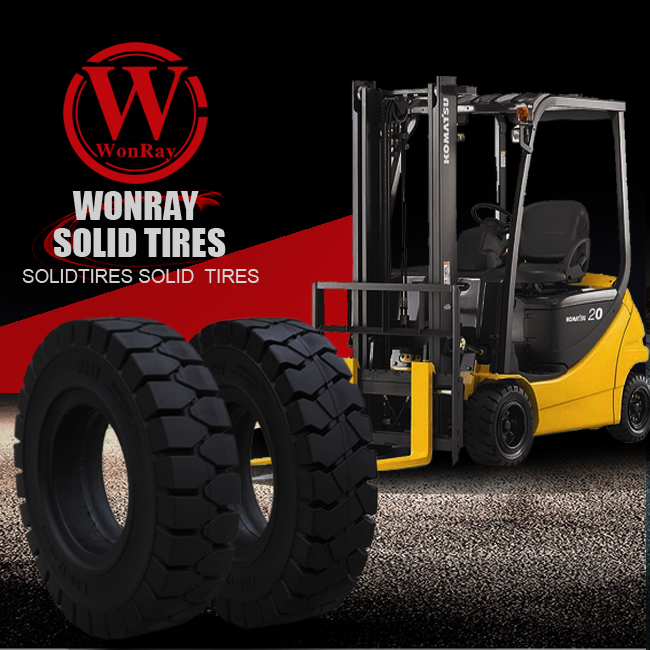
The Role of Traction and Stability in Safety
Safety is a top priority in any industrial setting, and tire performance directly affects how safely a forklift operates. Heavy-duty forklift tires are engineered to provide consistent traction, even under heavy loads.
Stable traction reduces the likelihood of slippage during acceleration or braking, which is particularly important in high-traffic areas. Additionally, a well-designed tire ensures even weight distribution, minimizing the risk of tipping when lifting or transporting materials.
By enhancing both traction and stability, these tires contribute to a safer working environment for operators and surrounding personnel.
Reducing Downtime Through Reliable Tire Performance
Unexpected downtime is one of the most significant challenges in industrial operations. Tire-related failures, such as punctures or excessive wear, can halt operations and disrupt workflow.
Heavy-duty forklift tires address this issue by offering increased resistance to common causes of failure. Solid tires, for example, eliminate the risk of punctures entirely, while reinforced pneumatic tires reduce vulnerability to damage.
This reliability allows forklifts to operate continuously, supporting higher productivity and more efficient use of resources.
Cost Efficiency Over the Equipment Lifecycle
While initial purchase price is an important consideration, it does not fully reflect the true cost of a tire. Heavy-duty forklift tires often provide better value when evaluated over their entire lifecycle.
● Extended lifespan reduces replacement frequency
● Lower maintenance requirements decrease labor and service costs
● Improved uptime increases operational output
● Reduced risk of accidents minimizes potential liability costs
When these factors are combined, the long-term financial benefits become clear, making heavy-duty tires a cost-effective choice for demanding applications.
Industry-Specific Considerations
Different industries place unique demands on forklift tires, and understanding these requirements is essential for optimal performance.
In ports and shipping terminals, forklifts handle heavy containers and operate continuously, requiring tires with high load capacity and durability.
In steel and metal processing facilities, exposure to heat and sharp materials demands tires with specialized compounds and reinforced structures.
In warehousing and distribution, the focus is on maneuverability and efficiency, particularly in high-density storage environments.
By tailoring tire selection to industry-specific conditions, businesses can achieve better performance and longer service life.
Best Practices for Maximizing Tire Value
To fully benefit from heavy-duty forklift tires, proper usage and maintenance practices should be implemented.
● Select tires that match the operational environment and load requirements
● Monitor tire wear regularly to identify potential issues early
● Maintain proper alignment to ensure even wear
● Train operators on safe driving practices to reduce unnecessary stress on tires
These practices help extend tire lifespan and maintain consistent performance.
Conclusion
Heavy-duty forklift tires are a critical factor in achieving reliable and efficient industrial operations. By understanding the demands of the working environment and selecting the appropriate tire type, businesses can significantly improve safety, reduce downtime, and optimize costs.
In a competitive industrial landscape, where efficiency and reliability are essential, investing in the right tire solution is not just a technical decision—it is a strategic advantage.
FAQ
- What defines a heavy-duty forklift tire?
It is a tire designed to handle high loads, continuous use, and harsh working conditions with enhanced durability. - How do I choose the right tire type?
Consider factors such as environment, load capacity, and surface conditions to match the tire to your application. - Are solid tires always the best option?
They are ideal for high-risk environments, but pneumatic tires may be better for uneven outdoor surfaces. - How can I extend tire lifespan?
Regular inspection, proper load management, and correct usage practices can significantly increase tire life.
Post time: 22-04-2026