
In chemical plants, forklifts frequently move between storage areas, production workshops, loading zones, and warehouse aisles. Although these routes may appear relatively smooth, floor joints, expansion gaps, and small changes in surface height can affect how the wheels support the vehicle. For Chemical Industry Forklift Tires, these transitions are important because they influence impact forces, vibration, load stability, and long-term operating conditions. Understanding what happens when a forklift crosses a floor joint helps operators assess tire performance in relation to the actual facility layout.
How Do Floor Joints Change Wheel-Ground Contact?
Floor joints are common in industrial buildings because concrete floors may require expansion gaps, construction joints, or connections between separately poured sections. These features are not necessarily defects. However, their width, depth, edge condition, and alignment can influence the way a forklift wheel passes over them.
When a tire reaches a joint, its contact with the floor changes briefly. A narrow, level joint may have little effect at a low travel speed. A wider gap, raised edge, or damaged joint can produce a more noticeable impact. The wheel may experience a sudden change in support, followed by a short period of vibration as it moves onto the next section of flooring. Tire diameter and profile influence how the wheel encounters the edge, while tire stiffness affects how impact forces are transmitted through the wheel assembly. Vehicle speed, wheel load, and the angle at which the forklift crosses the joint also contribute to the result.
For example, approaching a joint diagonally may cause the front wheels to cross it at different moments. This can create a different movement pattern from crossing the same joint straight on. When a forklift is carrying a load, the additional weight changes the forces acting on the wheels, making the condition of the floor and the manner of crossing particularly relevant.
Why Do Tire Characteristics Matter When Crossing Floor Joints?
Their dimensions, tread profile, rubber properties, and overall construction determine how they interact with small obstacles and surface discontinuities. Industrial solid tires are used in many material-handling applications because they provide load support without relying on an air-filled cavity. However, solid tires differ in construction and deformation characteristics. A tire designed for heavy loads on relatively smooth warehouse floors may behave differently from a configuration intended for more demanding surface conditions.
A tire with a relatively rigid structure may provide strong support under load, but it can also transmit more of a sharp impact to the wheel assembly when crossing an abrupt edge. The result depends on the complete tire design and operating conditions; stiffness alone does not determine performance. Tire dimensions, compound characteristics, wheel design, and the geometry of the floor joint must be considered together. Uneven wear, surface cracking, or other deterioration can change the contact pattern and may affect how consistently the wheel moves across floor transitions. If a forklift begins to produce more vibration than usual, replacing the tires should not automatically be the first response. The joint itself, wheel components, axle condition, and vehicle maintenance history should also be checked.
For Chemical Industry Forklift Tires, the practical objective is to match the tire configuration to the facility’s floor conditions and handling requirements. Selecting a tire solely by its load rating or general description may overlook the repeated impact conditions created by joints along frequently used routes.
What Problems Can Repeated Floor Transitions Create?
Repeated impacts can contribute to vibration and mechanical stress throughout the wheel assembly. Depending on the equipment design and the severity of the transitions, these forces may affect wheels, bearings, mounting components, and other connected parts. Tire wear may also become uneven if the vehicle repeatedly encounters damaged edges or if wheel alignment and loading are already problematic.
Forklifts carrying containers, drums, packaged chemicals, or other industrial materials must maintain controlled movement during transport. Sudden jolts can disturb unsecured loads and may increase the risk of shifting, particularly when the load is improperly positioned or the vehicle travels too quickly. In chemical facilities, where some materials require careful handling, controlling these movements is an important part of safe material transfer.
Floor joints can also expose differences between operating routes. One aisle may have smooth, level joints, while another contains damaged concrete edges or settlement between floor sections. If operators experience repeated jolts at the same location, the cause may be a localized flooring issue rather than a general tire-performance problem.
How Can Operators Reduce Unnecessary Impact During Floor Transitions?
The first step is to understand the route. Frequently used forklift paths should be inspected for open gaps, raised edges, damaged concrete, loose repair material, and differences in floor height. The following practices may help reduce unnecessary shock and maintain more predictable movement:
- Control travel speed: Reduce speed before reaching an uneven joint rather than braking sharply while the wheels are already crossing it. Lower approach speeds generally reduce the severity of impacts.
- Keep loads properly positioned: Follow the forklift’s rated capacity and load-handling instructions. Keep loads stable and correctly positioned so that the wheels are not subjected to unnecessary or uneven forces.
- Cross transitions predictably: Where the route and safety requirements permit, approach floor joints in a controlled, consistent manner. Avoid sudden steering inputs while crossing a pronounced surface discontinuity.
- Report recurring impact points: If the same joint repeatedly causes jolts, vibration, or load movement, report its location for inspection. A damaged floor section may require repair rather than a change in tire specification.
- Inspect the complete wheel system: Check tires for unusual wear or damage and assess wheel components if vibration persists. Do not assume that every change in ride quality originates from the tire.
These practices complement rather than replace proper floor maintenance and vehicle inspections. Operators should follow site procedures and the forklift manufacturer’s instructions, especially when transporting hazardous or sensitive materials.
How Should Tire Requirements Match the Facility Floor?
Some rely on smooth, sealed concrete in controlled production areas, while others include warehouse floors, loading bays, ramps, and connections between different building sections. When assessing Chemical Industry Forklift Tires, facility managers should consider the typical route, expected wheel loads, travel speed, turning frequency, and condition of the floor joints. Forklift type and tire dimensions also matter because different wheel configurations interact with the same floor feature in different ways.
Where floor joints are smooth and properly maintained, the priority may be consistent load support and predictable handling during routine transport. Where transitions are more pronounced, the evaluation should also consider impact behavior and whether the tire configuration is suitable for the surface conditions. This does not mean that a tire should compensate for damaged flooring. Significant gaps, loose concrete, or raised edges should be assessed and repaired as appropriate.
On many forklifts, the front wheels carry much of the load during lifting and transport, while the rear wheels perform an important role in steering. The loads and movement patterns differ, so tire requirements should be evaluated according to the wheel position and the vehicle manufacturer’s specifications.
Exploring Forklift Tire Options for Chemical Facilities
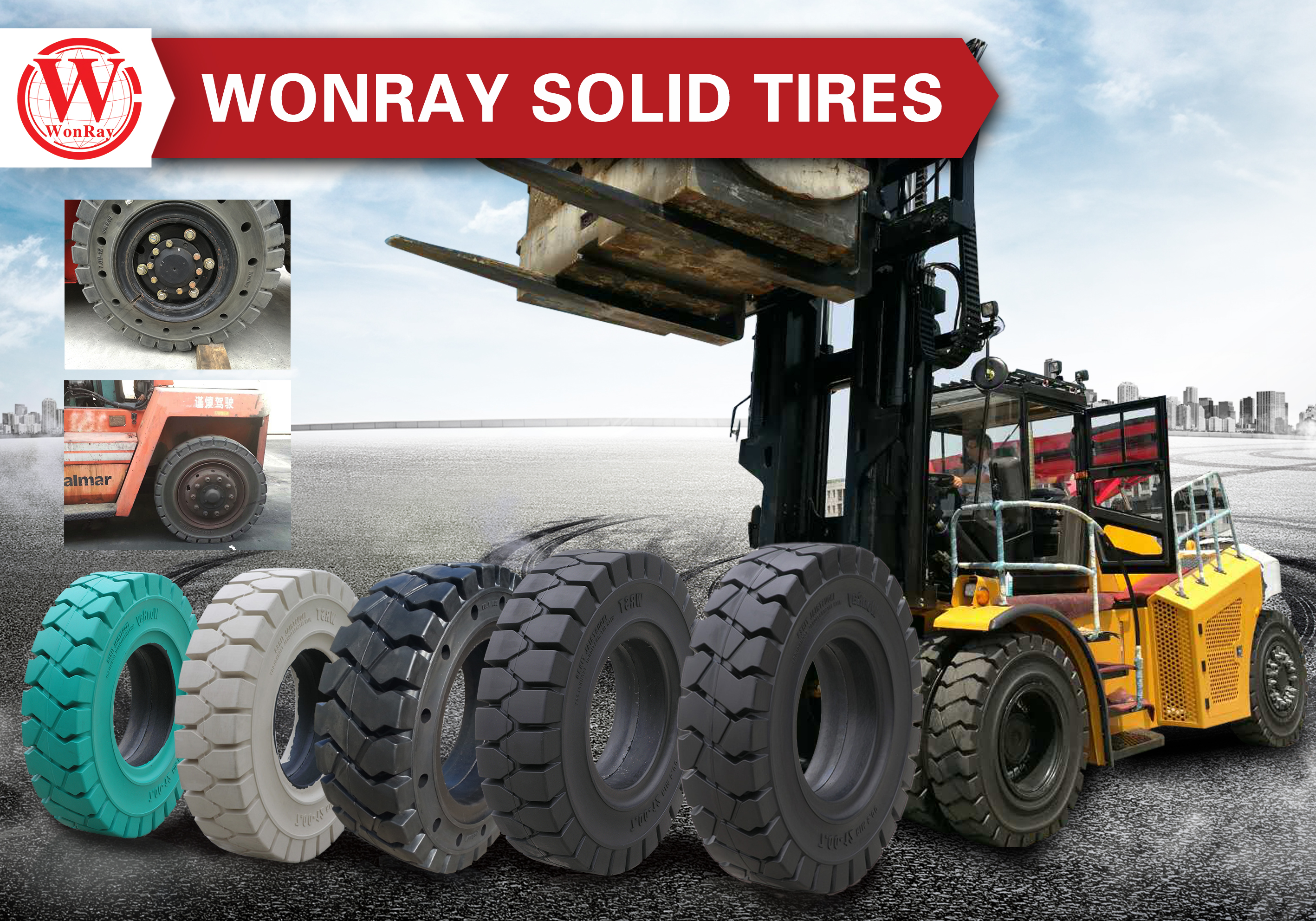
For chemical facilities that depend on forklifts for material handling, tire selection should reflect the equipment’s operating requirements and the condition of the routes it uses. WonRay provides industrial solid tire options for material-handling applications. When comparing suitable configurations, operators can consider forklift specifications, wheel dimensions, load requirements, floor conditions, and the frequency of travel across joints or other surface transitions. Reviewing these factors together helps identify options that fit the actual working environment and support consistent day-to-day operation.
Conclusion
Floor joints influence forklift movement by briefly changing wheel support and creating impact forces as tires cross surface transitions. The effects depend on joint condition, tire construction, wheel load, vehicle speed, and the way the forklift approaches the joint. Selecting suitable Chemical Industry Forklift Tires therefore requires more than checking load capacity alone. Combining appropriate tire selection with floor maintenance, controlled driving, and regular inspection helps reduce unnecessary impacts and maintain predictable material-handling performance.
FAQs
1. Do floor joints always damage forklift tires?
No. Properly designed and maintained joints may have little effect when forklifts cross them at appropriate speeds. Wider gaps, damaged edges, and repeated severe impacts are more likely to create operational concerns.
2. Should forklift tires be changed if the vehicle vibrates while crossing joints?
Not automatically. The vibration may come from the floor, tire condition, wheel components, axle alignment, or other vehicle systems. Inspecting the full system helps identify the actual cause.
3. Does carrying a heavy load change how a forklift crosses a floor joint?
Yes. A heavier load changes the forces acting on the wheels and may increase the consequences of a sudden impact. Operators should follow rated capacity limits, maintain stable loads, and reduce speed where appropriate.
4. Can tire selection replace floor-joint maintenance?
No. Tire configuration should suit the operating environment, but it cannot reliably compensate for damaged concrete, excessive gaps, or unsafe changes in floor height. Floor defects should be assessed and repaired as necessary.
Post time: 23-10-2026