
Forklifts are essential tools in warehouses, factories, and industrial operations, responsible for moving heavy loads quickly and efficiently. The performance and safety of a forklift are heavily influenced by the type of tires it uses. Among the various options available, solid tires have emerged as a superior choice for enhancing forklift safety, durability, and operational efficiency. Unlike traditional pneumatic tires, which can be punctured or require frequent maintenance, solid tires provide a reliable solution that minimizes downtime and maximizes productivity. In this article, we explore the advantages of solid tires for forklifts, practical applications, maintenance considerations, and how businesses can select the best tires to optimize their operations.
Advantages of Solid Tires for Forklifts
Solid tires offer a multitude of benefits for forklifts in industrial settings. Their design and material composition make them particularly suited for challenging work environments. The following advantages highlight why solid tires are increasingly favored by businesses worldwide.
● Enhanced Safety
One of the primary benefits of solid tires is the improved safety they provide. Pneumatic tires are prone to punctures, blowouts, and sudden loss of pressure, which can result in accidents and workplace injuries. Solid tires, on the other hand, are puncture-proof and maintain consistent stability regardless of surface conditions. This ensures a safer working environment for forklift operators and nearby personnel. The firm grip and predictable handling of solid tires reduce the risk of tipping, sliding, or sudden stops, particularly in busy industrial or warehouse spaces.
● Increased Efficiency
Durability directly impacts operational efficiency, and solid tires excel in this aspect. They are constructed from robust rubber compounds that resist wear, cuts, and abrasions, enabling forklifts to operate continuously without unexpected downtime. Unlike pneumatic tires, which may require frequent air pressure checks, repairs, or replacements, solid tires demand minimal maintenance. This not only reduces labor costs associated with tire upkeep but also ensures that forklifts remain productive throughout extended shifts. Businesses benefit from consistent performance, as solid tires maintain their shape and load-bearing capacity over long periods of use.
● Improved Load Capacity
The solid construction of these tires allows forklifts to carry heavier loads without compromising stability. This is particularly important in industrial environments where lifting and transporting dense or bulky materials is a daily task. Solid tires support higher load limits compared to pneumatic options, enhancing operational flexibility and ensuring safe handling of large pallets, containers, or heavy machinery components. Operators can work more confidently, knowing that tire performance will remain reliable under substantial weight.
● Durability in Harsh Environments
Industrial settings often involve rough or uneven surfaces, including concrete floors, gravel yards, and warehouse ramps. Solid tires are engineered to withstand these demanding conditions. Their resistance to cuts, abrasions, and embedded debris makes them suitable for environments where conventional tires may fail. This durability reduces the frequency of replacements, ultimately lowering long-term operational costs. Additionally, their resilience ensures that forklifts can maintain traction and control, even when navigating debris-strewn or abrasive surfaces.
● Cost-Effectiveness Over Time
Although solid tires may have a higher upfront cost than pneumatic tires, their long-term benefits make them a cost-effective investment. Reduced downtime, lower maintenance requirements, and extended service life all contribute to significant savings for businesses. By investing in high-quality solid tires, companies can avoid unexpected expenses and maintain a predictable budget for forklift operations.
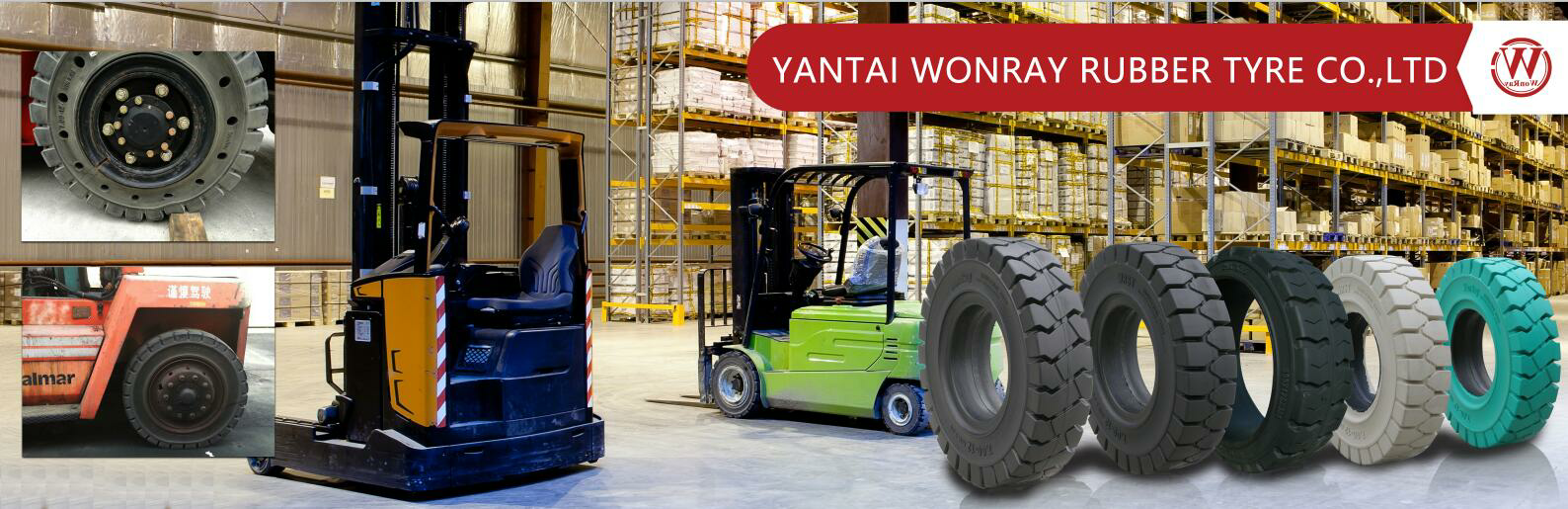
Practical Applications
Solid tires are versatile and suitable for a range of forklift applications. They are particularly beneficial in settings such as:
● Warehouses – Smooth, puncture-resistant tires allow forklifts to move quickly while minimizing the risk of downtime.
● Construction Sites – Solid tires handle uneven terrain, debris, and heavy materials without compromising stability.
● Manufacturing Facilities – Continuous operations benefit from the durability and long lifespan of solid tires, reducing maintenance interruptions.
● Shipping Yards and Ports – Forklifts transporting heavy containers can rely on solid tires for consistent performance under load.
By choosing solid tires, businesses can ensure their forklifts perform reliably across diverse operational environments, maintaining efficiency and safety regardless of terrain or workload.
Maintenance Tips for Solid Tires
While solid tires require less maintenance than pneumatic tires, proper care is still essential to maximize their lifespan:
● Regular Inspection – Check tires for cracks, uneven wear, and embedded debris. Early detection of potential issues prevents damage to the forklift and ensures operator safety.
● Clean Tires Frequently – Remove dust, grease, and debris to prevent surface deterioration and maintain traction.
● Monitor Load Limits – Avoid overloading, which can accelerate wear and reduce performance.
● Rotate Tires Periodically – Rotating solid tires ensures even wear, extending their operational life.
Implementing a maintenance routine helps protect your investment in solid tires and supports consistent forklift performance.
FAQs About Solid Tires for Forklifts
Q: What materials are solid tires made of?
A: Solid tires are typically made from high-quality rubber compounds designed for durability, puncture resistance, and load-bearing strength.
Q: Can solid tires fit all forklift models?
A: Solid tires come in a range of sizes and designs to suit different forklift types. Consulting with a tire specialist ensures compatibility with your specific forklift model.
Q: How long do solid tires last compared to pneumatic tires?
A: With proper maintenance, solid tires often last several times longer than pneumatic tires, making them a more reliable and cost-effective option for heavy-duty operations.
Q: Are solid tires suitable for outdoor use?
A: Yes, they perform well on concrete, asphalt, and moderately rough terrains, although very uneven or soft terrain may require specialized tire designs.
Conclusion
In conclusion, solid tires are a highly effective solution for enhancing forklift safety and efficiency. Their puncture-proof design, superior durability, high load capacity, and minimal maintenance requirements make them the preferred choice for industrial and warehouse operations. Investing in solid tires not only improves workplace safety but also increases productivity and reduces long-term operational costs.
Product Selection Recommendations
When selecting solid tires for forklifts, businesses should consider factors such as load capacity, forklift type, application requirements, and operating environment. Consulting with tire experts or manufacturers ensures the selection of the most suitable tires, maximizing both safety and performance. Prioritizing durability, reliability, and operational efficiency will guarantee that forklifts operate smoothly, safely, and productively with the right set of solid tires.
Post time: 07-01-2026