
Industrial blenders and mixers are often moved between production stations, cleaning areas, storage spaces, and maintenance zones. Although these machines may not travel continuously, their weight and working environments place specific demands on their tires. The right tire must support the equipment while allowing stable movement across different factory surfaces.
Blender and Mixer Solid Tires are suitable for applications where puncture resistance and reduced maintenance are important. However, selecting tires based only on load capacity can lead to poor performance. Smooth concrete, rough floors, wet surfaces, and powder-contaminated areas create different contact conditions. These differences affect traction, rolling resistance, and tire wear. Tread design should therefore match the actual working environment. Understanding how different factory floors influence tire performance helps operators make more practical choices.
Why Factory Floor Conditions Matter
Factory floors are rarely identical throughout a facility. A mixer may travel across smooth concrete, coated surfaces, uneven areas, or floors where powder and liquid residues accumulate.
Each surface affects tire contact differently. Smooth concrete provides relatively consistent support, but water or fine particles can reduce friction. Rough concrete offers more surface texture but may increase rolling resistance and mechanical wear. Coated floors are generally easier to clean, although their friction characteristics can change when exposed to moisture or cleaning chemicals.
These conditions influence how easily equipment can be repositioned and how reliably it moves through turning areas. A tread pattern that works well on one surface may not perform equally well on another. Evaluating the equipment’s regular travel route is therefore an important step before selecting tires.
Matching Tread Designs to Different Factory Floors
The goal of tread selection is not to choose the deepest or most aggressive pattern. It is to find a design that provides sufficient grip without creating unnecessary resistance or damaging the floor.
Smooth Concrete and Finished Floors
Smooth concrete is common in food processing plants, packaging facilities, and manufacturing workshops. Its even surface allows tires to maintain relatively consistent contact with the ground.
For equipment that moves slowly and operates mainly on clean, level floors, a relatively simple tread pattern may be sufficient. Aggressive patterns do not automatically improve performance in these conditions and may increase rolling resistance.
Cleanliness remains important. Water, flour, and other production residues can change the friction between the tire and the floor. In such environments, rubber compound suitability and contact characteristics should be considered alongside tread appearance.
Rough Concrete and Uneven Surfaces
Older industrial floors may contain expansion joints, small cracks, rough patches, and minor height differences. When mixers move across these areas, tires experience more frequent changes in ground contact.
The selected tread should support stable movement without creating excessive vibration or concentrated stress. However, choosing an extremely aggressive pattern is not always necessary, especially when equipment also travels across smooth indoor floors.
Tire construction, dimensions, and load capacity should be evaluated together with the tread design.
Wet and Frequently Cleaned Areas
Cleaning zones present additional challenges because water and chemical residues may reduce friction, particularly on smooth floors. This can affect equipment when it turns or moves between production and washing areas.
For these applications, Blender and Mixer Solid Tires should be selected according to the actual wet-floor conditions and the manufacturer’s performance guidance. A visible tread pattern alone does not guarantee sufficient traction. Rubber properties, floor coatings, contaminants, and contact area all influence the result.
Equipment should also be moved at controlled speeds. Appropriate tire selection needs to work alongside regular floor cleaning and safe operating procedures.
Floors Contaminated with Powder and Small Particles
Flour processing, feed production, and chemical mixing facilities may have fine particles accumulating on the floor. These materials can enter the tire contact area and affect friction.
A tread pattern that is difficult to clean may retain debris, while loose particles can interfere with consistent ground contact. Regular cleaning and inspection are therefore necessary, even when solid tires are installed.
The appropriate design depends on the type of residue, how frequently it accumulates, and the facility’s cleaning procedures.
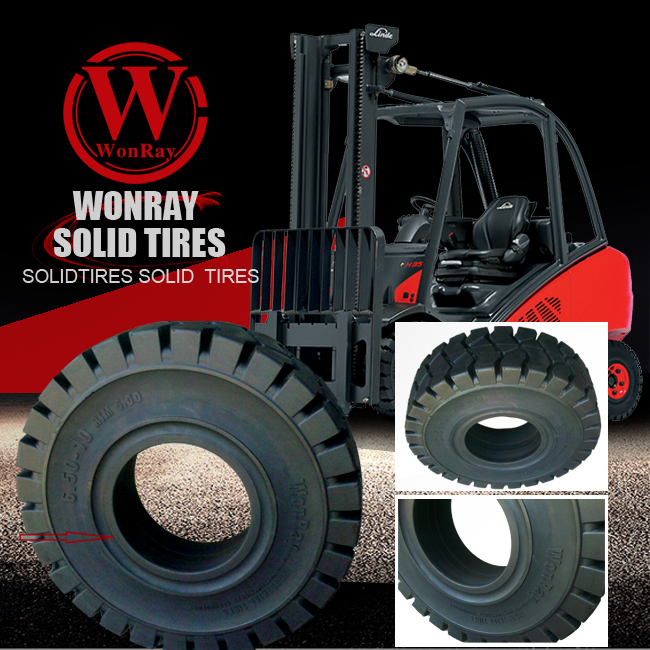
How Tread Design Influences Equipment Movement
Tread design affects how a tire interacts with the floor, but its performance also depends on machine weight and tire dimensions.
A relatively continuous contact surface can support smooth movement on clean, level floors and distribute loads across the contact area. More defined tread blocks or grooves may provide additional contact edges on textured surfaces. However, their effectiveness depends on the floor material and the presence of contaminants.
Turning performance is another important consideration. Some mixers need to move through narrow production aisles and change direction within limited spaces. Excessive rolling resistance can make repositioning difficult, while insufficient traction may reduce movement stability.
The objective is to balance grip and maneuverability. A suitable tread should support the equipment’s movement requirements without creating unnecessary resistance during routine handling.
Other Factors to Consider When Selecting Solid Tires
Tread design is only one part of the selection process. Two tires with similar patterns may perform differently because of variations in rubber compounds, construction, and dimensions.
Before purchasing Blender and Mixer Solid Tires, consider these practical requirements:
- Equipment weight and load distribution: Calculate the load carried by each wheel, including the machine’s weight and applicable operating loads. The tire’s rated capacity must meet equipment requirements.
- Movement frequency: Equipment repositioned several times per shift may experience different wear from machines that remain stationary for long periods.
- Turning requirements: Frequent turns in narrow spaces place different demands on tires than straight-line movement.
- Floor protection: Some facilities need tires that minimize marking or protect coated surfaces. Check whether the rubber compound is suitable for these requirements.
- Temperature and chemical exposure: Heat, oils, cleaning agents, and industrial chemicals may affect rubber performance. Material compatibility should be confirmed before installation.
Considering these factors together helps prevent the mistake of choosing tires that meet load requirements but do not suit the actual working environment.
Monitoring Tire Wear After Installation
Even correctly selected tires require regular inspection. Their wear patterns can reveal whether the tread design and equipment configuration are appropriate.
If the center of the tread wears faster than other areas, review the loading and contact conditions. Uneven wear on one side may be associated with frequent turning, unbalanced loads, or incorrect wheel installation. Cracking and surface deterioration may indicate exposure to unsuitable chemicals or operating temperatures.
Recording tire condition and equipment operating hours helps identify changes over time. It also makes it easier to distinguish normal wear from problems caused by increased movement frequency or changes in production layout.
Replacement decisions should consider whether the equipment’s working route has changed. A tire that performs well on a smooth production floor may no longer be suitable after the machine is moved to a rougher or frequently washed area.
For facilities operating different types of mobile mixing equipment, an experienced solid tire manufacturer such as WonRay can help evaluate load requirements, tread configurations, and floor conditions. Reviewing the complete application rather than choosing by appearance alone makes tire selection and replacement more consistent.
Conclusion
Choosing Blender and Mixer Solid Tires requires more than checking dimensions and load capacity. Smooth concrete, rough factory floors, wet cleaning areas, and powder-contaminated surfaces create different demands on tire contact and equipment movement.
The most suitable tread design should match the actual working route while balancing traction, maneuverability, durability, and floor protection. By evaluating floor conditions, equipment loads, movement frequency, and wear patterns together, facilities can make more practical tire choices and reduce avoidable maintenance interruptions.
FAQ
1. Are aggressive tread patterns always better for industrial mixers?
No. Aggressive patterns may help in certain rough or contaminated environments, but they can increase rolling resistance and may be unnecessary on smooth factory floors.
2. Can solid tires be used on frequently washed floors?
They may be suitable, but wet-floor traction must be evaluated. Floor coatings, cleaning chemicals, water accumulation, and rubber properties all influence performance.
3. What causes uneven wear on mixer tires?
Common causes include frequent turning, uneven load distribution, incorrect installation, and unsuitable floor conditions. Both the tires and equipment should be inspected.
4. Should tire selection change when a mixer moves to another production area?
It may need to. Different floor textures, cleaning routines, and contamination levels can change tire requirements. The existing configuration should be reviewed before continued use.
Post time: 05-11-2026