
In the fast-paced world of airport operations, the efficiency and reliability of baggage handling systems are paramount. A key yet often overlooked component in these systems is the airport conveyor solid tire. These tires are essential for ensuring smooth operation of conveyor mechanisms that transport luggage, freight, and cargo throughout terminals. Choosing the right solid tire can dramatically impact equipment longevity, operational efficiency, and maintenance costs, making it a critical consideration for airport logistics and ground handling companies.
What Are Airport Conveyor Solid Tires?
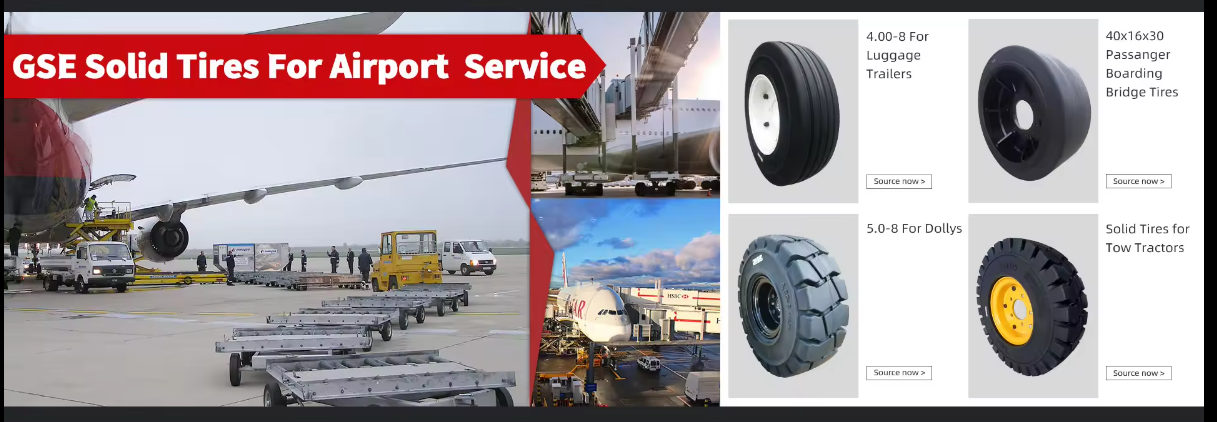
Airport conveyor solid tires are specially designed wheels made of high-density rubber or polyurethane that support the conveyor rollers and casters in baggage handling systems. Unlike pneumatic or air-filled tires, these solid tires are impervious to punctures, resistant to wear, and capable of maintaining performance under heavy loads. Their robust construction makes them ideal for high-traffic environments where conveyor systems operate continuously, often 24/7, moving hundreds of bags per hour.
The unique design of airport conveyor solid tires ensures:
● Consistent load distribution across rollers or casters, reducing strain on the conveyor framework
● Enhanced durability to withstand frequent operational cycles and continuous rotation
● Smooth, low-vibration movement to prevent luggage damage and maintain system efficiency
Why Solid Tires Are Essential for Airport Conveyors
Airports operate in a high-stakes environment where delays and mechanical failures can have significant repercussions. The conveyor system is the backbone of baggage handling, and tire performance directly influences reliability. Solid tires offer several key benefits over traditional pneumatic or semi-solid alternatives:
● Puncture Resistance: Airports can have debris such as luggage tags, plastic components, or metal fragments. Solid tires eliminate the risk of punctures that could stop conveyor operations.
● Minimal Maintenance: Unlike air-filled tires that require regular pressure checks and repairs, solid tires maintain their integrity over long periods, reducing maintenance labor and associated downtime.
● Load Handling Capacity: Conveyor systems carry varying baggage weights, and solid tires distribute this weight evenly, minimizing stress on the conveyor framework and rollers.
● Enhanced Safety: Solid tires provide stable traction and consistent movement, reducing the risk of conveyor jams or sudden equipment stops that could endanger staff or passengers.
Key Features of Airport Conveyor Solid Tires
Modern airport conveyor solid tires are engineered with specific characteristics to meet the rigorous demands of aviation logistics.
● Durable Rubber or Polyurethane Composition: High-quality materials resist wear and abrasions caused by continuous operation.
● Shock Absorption: Advanced solid tires incorporate flexible compounds that reduce vibration, protecting both baggage and the conveyor system.
● Custom Load Ratings: Solid tires can be selected based on specific conveyor requirements, accommodating various luggage sizes and weights.
● Temperature and Environmental Resistance: Tires are designed to operate efficiently in diverse environmental conditions, including air-conditioned terminals or sections exposed to temperature fluctuations.
Advantages of Using Solid Tires for Airport Conveyors
Implementing solid tires in baggage handling systems can significantly improve airport operations.
● Reduced Downtime: The durability and puncture-proof nature of solid tires minimize interruptions, keeping baggage moving and reducing flight delays.
● Cost-Effectiveness: Though the upfront cost of solid tires may be higher than pneumatic options, their long lifespan and low maintenance result in lower total cost of ownership.
● Improved Operational Efficiency: Smooth and consistent performance ensures that luggage moves seamlessly across conveyor belts, improving throughput and customer satisfaction.
● Extended Equipment Life: By reducing vibration and providing stable support, solid tires help prevent premature wear on conveyor rollers, motors, and structural components.
● Eco-Friendly Benefits: High-quality solid tires are recyclable and contribute to a reduction in replacement frequency, supporting sustainability initiatives within airport operations.
Selecting the Right Airport Conveyor Solid Tires
When choosing solid tires for airport conveyors, several considerations ensure optimal performance:
● Weight Capacity: Determine the maximum load that the conveyor system handles to select tires with sufficient load ratings.
● Diameter and Width: Tires must fit the conveyor rollers or casters accurately for proper contact and movement.
● Material Choice: Rubber and polyurethane options have different properties; rubber offers high durability, while polyurethane provides excellent smoothness and low noise levels.
● Operational Environment: Consider factors like temperature variations, terminal layout, and exposure to debris to select tires with appropriate resistance features.
Consulting with a specialized conveyor tire supplier can help match tire specifications to your system’s exact requirements, maximizing operational efficiency and minimizing maintenance issues.
Conclusion
Airport conveyor solid tires play a critical role in ensuring smooth, reliable, and efficient baggage handling operations. Their puncture-resistant, durable construction reduces maintenance, extends equipment life, and enhances safety for both airport staff and passengers. Investing in high-quality solid tires is not merely a maintenance decision—it is a strategic investment in operational efficiency and long-term cost savings for airport logistics systems.
FAQ
Q1: Why are solid tires preferred over pneumatic tires for airport conveyors?
A: Solid tires are puncture-proof, durable, and require minimal maintenance, making them ideal for high-traffic baggage handling systems that operate continuously.
Q2: Can solid tires handle varying luggage weights?
A: Yes. Solid tires are designed to distribute weight evenly, accommodating a range of baggage sizes without compromising performance.
Q3: How do solid tires reduce operational downtime?
A: Their resistance to punctures and wear eliminates unexpected failures, ensuring conveyor systems remain operational and minimizing flight delays.
Q4: What materials are commonly used in airport conveyor solid tires?
A: High-density rubber and polyurethane are commonly used, offering durability, smooth movement, and resistance to temperature and environmental variations.
Post time: 09-03-2026