
6.00 X9 Forklift Tire is a common industrial forklift size used on compatible wheel systems, but the marking is only the beginning of a correct replacement. The same 6.00 X9 Forklift Tire size can appear in pneumatic, solid-pneumatic and application-specific rubber versions, so two tires carrying the same nominal size may not be interchangeable.
For replacement work, the important task is to preserve the relationship between tire outside diameter, rim, axle load and available clearance. If only the sidewall marking is copied, the truck can end up with the wrong construction or a significant rolling-diameter difference from the tire on the other side of the axle.
What 6.00 X9 Actually Means
In traditional industrial tire notation, 6.00 generally indicates a nominal section width and 9 indicates rim diameter, usually in inches. The marking does not state the exact manufactured outside diameter, tread pattern, rubber compound, load capacity or whether the tire contains air.
That is why a 6.00 X9 Forklift Tire should be identified with several pieces of information together. A photo of the full sidewall, rim measurements and the forklift model are more reliable than a typed size alone.
A Replacement Record Should Contain These Items
| Item to record | Why it matters |
| Full tire marking | Confirms nominal size and construction clues |
| Tire type | Pneumatic, solid-pneumatic or another compatible format |
| Rim dimensions | Determines whether the tire can be mounted correctly |
| Wheel position | Drive and steer positions have different load and scrub patterns |
| Actual outside diameter | Important when only one side or one axle is being replaced |
| Forklift model and attachment | Helps estimate the real load condition |
| Current wear pattern | Shows whether the previous tire failed normally or abnormally |
Pneumatic and Solid-Pneumatic 6.00 X9 Tires Serve Different Priorities
A pneumatic 6.00 X9 Forklift Tire uses compressed air as part of its load support and cushioning. It is useful where surface roughness is significant and puncture exposure is manageable. Pressure condition is important because underinflation changes tire deflection, heat and effective height.
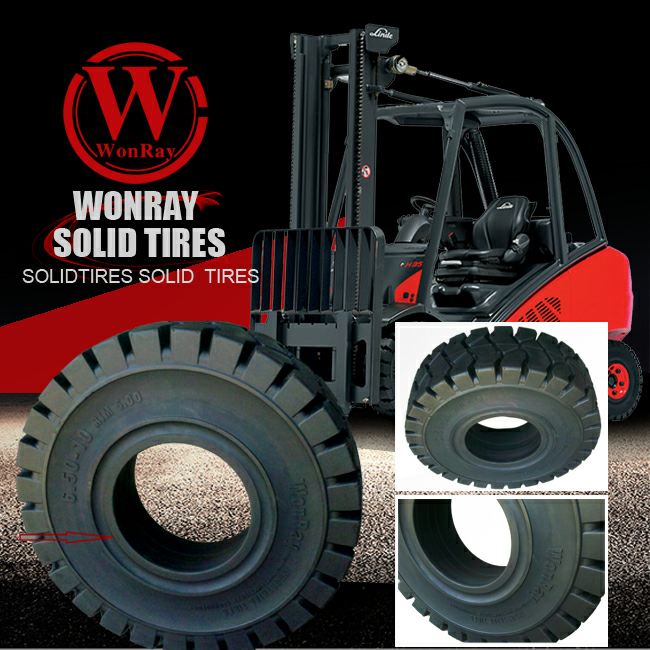
A solid-pneumatic 6.00 X9 Forklift Tire removes the air chamber and supports the truck through solid rubber. It is often considered where nails, metal scraps, damaged pallets or repeated pressure loss create interruptions. The ride is firmer, but ordinary penetration no longer produces a flat caused by air loss.
The correct choice depends on which problem matters more on the actual route. A smooth factory with metal debris presents a different requirement from a rough yard with little puncture risk.
Do Not Assume the New Tire Should Match the Original Diameter on Paper
Tires wear down. A new 6.00 X9 Forklift Tire can therefore be noticeably larger in rolling diameter than the partly worn tire on the opposite side. A large left-right difference can change load sharing and the way the truck tracks, especially on the drive axle.
When replacing only part of a set, compare actual diameter or remaining wear condition. If the paired tire is close to the end of its usable life, replacing both sides can be more sensible than mixing one new tire with one heavily worn tire.
The Axle Position Changes What the Tire Experiences
Front drive tires on many counterbalanced forklifts carry high working load when a pallet is lifted and also transmit drive and braking torque. Rear steer tires experience more lateral scrub during repeated tight turning. This means the same 6.00 X9 Forklift Tire size can wear differently depending on where it is installed.
• Drive position: watch for heat, center wear, traction loss and chunking under torque.
• Steer position: watch for rounded shoulders, one-sided scrub and flat spotting from severe steering.
• Paired tires: compare diameter and wear rather than judging each tire independently.
Non-Marking Requirements Should Be Treated Separately From Size
Some indoor forklifts need a 6.00 X9 Forklift Tire that reduces dark floor marks. Non-marking rubber can address this requirement, but it does not change the basic need to match construction, load and wheel dimensions. It also does not automatically mean higher traction or longer wear.
If the forklift moves through food handling, clean assembly or light-colored coated floors, floor marking may deserve high priority. If the same truck also crosses wet loading areas or ramps, traction needs to be checked at the same time.
Old Tire Damage Can Prevent Repeating the Same Replacement Mistake
A worn tire tells a story. If the previous 6.00 X9 Forklift Tire shows even wear across the tread, replacing like for like may be reasonable. If it has deep shoulder tearing, one-sided wear, repeated flat spots or heat cracking, simply fitting the same specification can reproduce the same problem.
Before replacement, compare tire condition with alignment, brake drag, wheel bearing condition, axle load and the route. Tire selection should solve the normal operating demand, while mechanical faults should be corrected separately.
The Size Is Useful Because It Narrows the Search, Not Because It Finishes It
6.00 X9 Forklift Tire is a precise search term, but correct replacement still requires tire construction, rim data, wheel position and actual working conditions. Treating the marking as one part of a complete specification reduces the chance of installing the right size in the wrong form.
WonRay can match 6.00 X9 solid forklift tire options when the current wheel data and operating conditions are available. A complete sidewall photo and wheel information are usually the quickest starting point.
Frequently Asked Questions
1. Does 6.00 X9 tell me the exact outside diameter?
No. It is a nominal size designation. Actual outside diameter varies with construction, manufacturer and wear condition.
2. Can a pneumatic 6.00 X9 tire be replaced with a solid version?
Only if the forklift and rim are compatible and the change is appropriate for the load, route and clearance.
3. Should both tires on the same axle be replaced together?
Not always, but a large difference in wear or rolling diameter between paired tires should be avoided.
4. What information should be sent for a 6.00 X9 replacement?
Send the complete tire marking, forklift model, rim dimensions, wheel position, current tire photos and normal operating conditions.
Post time: 27-08-2026