
A 323×100 Wheel looks simple because the size itself appears to describe almost everything: approximately 323 mm outside diameter and 100 mm width. In practice, a replacement wheel for a scissor lift or other aerial work platform has to match much more than these two dimensions. The center structure, mounting interface, tread pattern, load requirement, machine position and floor environment all influence whether the wheel will work correctly on the equipment.
This is especially important on compact aerial platforms. A small difference in wheel geometry can affect ride height, steering response, brake or drive engagement and clearance around the chassis. For that reason, a 323×100 Wheel should be treated as a complete machine component rather than as a generic solid rubber wheel.
Why a Compact AWP Wheel Needs Precise Matching
Scissor lifts move slowly, but their wheel requirements are demanding in a different way from road vehicles. The machine carries its own chassis, battery or power system, lifting structure and platform load through a relatively small set of wheels. It also performs frequent starts, stops and low-speed turns in areas where accurate positioning matters.
Because the platform may be used close to walls, racks, doors and production equipment, wheel geometry is closely tied to the machine design. If the replacement wheel changes the effective diameter or center position, the platform may sit differently from the original configuration. That is why a visually similar 323×100 wheel is not automatically an interchangeable wheel.
What the 323×100 Size Tells You—and What It Does Not
The 323×100 designation gives two important external dimensions. The first value describes the approximate outside diameter, while the second describes the approximate section width. These numbers help confirm whether the wheel belongs to the same physical size class as the original.
However, they do not identify the hub. Two wheels can share the same outside diameter and width while using different bore dimensions, bolt patterns, bearing positions, offsets or drive interfaces. They can also use different tread designs or rubber compounds. For a scissor lift, the center structure is often just as important as the rubber size.
This is why replacement identification should include photographs of both sides of the old wheel. ## Tread Pattern Changes How the Wheel Behaves Indoors
Aerial work platforms often operate on smooth concrete, epoxy-coated floors, warehouse surfaces or finished commercial flooring. In these conditions, aggressive off-road tread is usually unnecessary. What matters more is predictable rolling, steering consistency and controlled contact with the floor.
Different tread patterns can change the amount of rubber that contacts the ground and the way the wheel responds during a tight turn. A more open pattern can increase local tread movement, while a more supported pattern can create a steadier contact footprint. The correct choice depends on the machine and its intended working environment rather than on appearance alone.
For indoor applications, non-marking rubber is also common because black floor marks can create extra cleaning work. This is a material requirement rather than a size requirement, so the 323×100 dimensions still need to be matched separately from the rubber color or compound.
Load Rating Must Be Read With Operating Speed
A scissor lift wheel may look small, but it supports part of the entire machine weight. The relevant load is not only the platform payload. The wheel also carries the chassis, batteries, lifting structure and any uneven weight distribution created by the machine layout.
Industrial wheel load ratings are therefore linked to defined operating conditions. A published maximum load is meaningful only when the speed and application correspond to the product specification. Scissor lifts normally work at low travel speeds, which is one reason compact solid wheels can carry substantial loads relative to their size.
When matching a replacement, the machine model and wheel position should be confirmed. A wheel used at a drive position can experience different torque and braking forces from a free-rolling wheel. Even if the static load is similar, the mechanical duty is not identical.
Why the Hub and Bearing Area Deserve Extra Attention
Many replacement mistakes happen because the outer rubber dimensions are measured carefully while the center is ignored. On an integrated wheel, the hub determines how the wheel connects to the machine. Bearing size, bore diameter, shaft fit, keyway, bolt pattern or brake arrangement can all be part of the center design.
Before ordering a replacement, inspect the old wheel for part numbers and manufacturer markings. Measure the mounting area where practical and record any spacer arrangement. If the old wheel has bearing play, the issue may not be limited to worn rubber. Replacing only the outer wheel without checking the center can leave the original mechanical problem unresolved.
Wear Patterns Can Help Identify the Real Problem
These patterns should be photographed before the old wheel is discarded. They provide useful evidence about how the machine actually operates and whether the replacement should simply match the existing specification or whether another issue should be corrected at the same time.
When Should a 323×100 Wheel Be Replaced?
Replacement should be based on condition rather than on a fixed calendar interval. The tread should be inspected for severe wear, cracking, chunking, flat spots and uneven diameter. The center should also be checked for bearing play, loose hardware, deformation or damage around the mounting area.
If one wheel is significantly smaller than the others because of wear, the platform may no longer sit exactly as intended. For a machine with multiple identical wheel positions, comparing remaining diameters can help determine whether replacing one wheel or a matched pair is the better maintenance decision.
WonRay 323×100 Wheel Solution
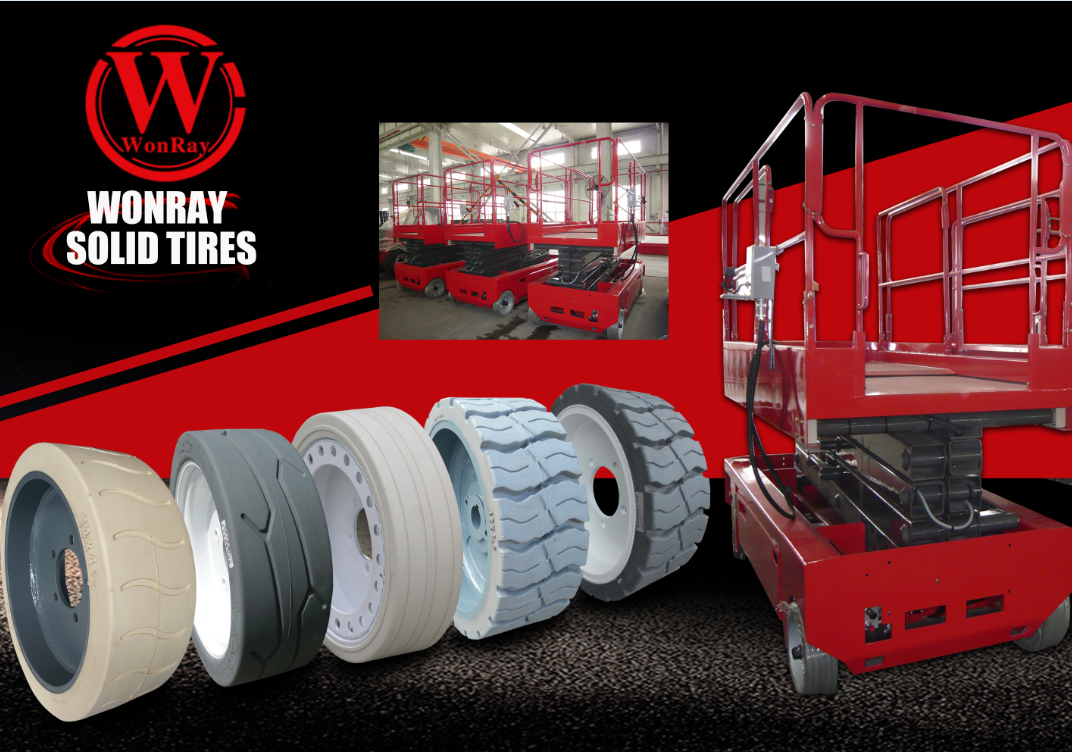
WonRay publishes a 323×100 solid wheel within its scissor lift wheel range. The listed configuration uses an integrated FB wheel structure with R713 or R707 tread options. The published outside diameter is 323 mm, section width is 100 mm, net weight is about 9.1 kg and maximum load is listed at 635 kg for other industrial vehicles at 10 km/h.
The same product family includes multiple solid wheel sizes for aerial work platforms and is offered in non-marking rubber for indoor use. WonRay also lists replacement coverage for common scissor lift brands and models, which makes equipment identification useful when the original wheel marking is difficult to read.
For matching, provide the platform brand and model, the original wheel size, clear photographs of both wheel sides, mounting or bearing details, tread requirement and working environment. This allows the 323×100 Wheel to be checked as a complete assembly instead of only by its outside dimensions.
Conclusion
A 323×100 Wheel is a compact but highly specific industrial component. The outside diameter and width are only the first two dimensions to confirm. Hub design, tread, rubber compound, wheel position, load, speed and the condition of the original wheel all influence whether the replacement is correct.
For scissor lifts and other aerial work platforms, precise matching helps preserve the machine geometry and operating behavior that the original wheel system was designed to provide. The most reliable replacement process begins with the complete old wheel, not only the two numbers in the size name.
FAQ
Is every 323×100 Wheel interchangeable?
No. Wheels with the same outside dimensions can use different hub, bearing, mounting or drive structures, so the complete center design must be checked.
What tread patterns does WonRay list for 323×100?
WonRay lists R713 and R707 for its published 323×100 scissor lift wheel configuration.
What is the published load for the WonRay 323×100 Wheel?
The listed maximum load is 635 kg for other industrial vehicles at 10 km/h under the published product conditions.
What should be provided for replacement matching?
Provide the machine brand and model, photos of both sides of the current wheel, external dimensions, hub or bearing details, tread requirement and operating environment.
Post time: 14-09-2026