
In industrial operations and commercial vehicle applications, reliability, safety, and reduced maintenance are critical factors when choosing tire solutions. Solid rubber tires for cars have become a practical alternative to traditional pneumatic tires in certain sectors. Unlike air-filled tires, solid rubber tires do not require air pressure and are completely puncture-proof. Their high durability and long operating life make them suitable for specialized vehicles, factory transport systems, mining and construction applications, and material handling operations.
For B2B buyers, fleet managers, and industrial vehicle manufacturers, understanding the structure, capabilities, and application scenarios of solid rubber tires is essential when upgrading equipment or improving operational safety.
What Are Solid Rubber Tires for Cars?
Solid rubber tires are constructed from compressed and molded rubber with no air chamber. This eliminates the risk of blowouts, punctures, and deflation. Although they are not used for everyday passenger cars, solid tires are widely used in industrial vehicles, commercial machinery, and specialized equipment.
Typical vehicle types include:
• Airport and terminal vehicles
• Factory or warehouse transport cars
• Construction and mining vehicles
• Utility and service vehicles
• Automated guided vehicles (AGVs)
• Electric carts and platform cars
Their robust design provides reliable performance in harsh environments where standard tires may fail.
Key Advantages of Solid Rubber Tires
Solid rubber tires offer several benefits for industrial and commercial applications.
1. Puncture-proof structure
• No leaks, no deflation, no blowouts
• Suitable for debris-filled or uneven terrain
• Ideal for heavy-duty industrial operations
2. Long lifespan and durability
• High wear-resistance and abrasion-resistance
• Better performance under extreme working conditions
• Reduced frequency of replacement
3. High load-bearing capacity
• Supports heavy equipment and continuous operations
• Better stability under high weight
• Suitable for slow-moving industrial vehicles
4. Reduced maintenance
• No tire pressure checks
• No risk of flats or cracks
• Lower total operating cost
This makes solid tires ideal for heavy-duty sectors where uptime is essential.
Industrial Applications of Solid Rubber Tires for Cars
Solid tires are commonly used in:
• Warehousing and logistics
• Airports and ports
• Mining, chemical and construction industries
• Industrial plants and factory transportation
• Underground tunnels and hazardous environments
The tires are designed to withstand environments where sharp objects, uneven surfaces, and heavy loads are common.
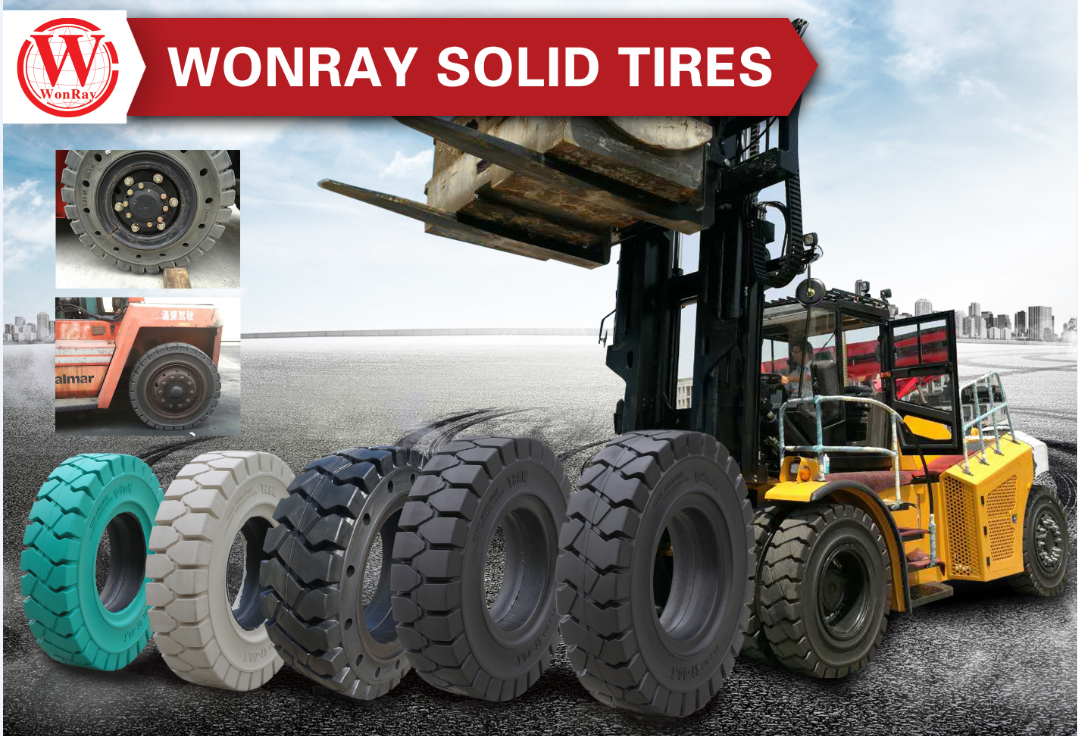
Solid Rubber Tires vs. Pneumatic Tires
Advantages of Solid Tires
• No punctures or blowouts
• Longer service life
• Better performance under high load
• Lower maintenance cost
Limitations
• Less shock absorption at high speeds
• Mainly suitable for industrial and low-speed vehicles
Because of these characteristics, solid tires are not used for high-speed passenger cars but excel in specialized industrial operations.
Types of Solid Rubber Tires
Solid rubber tires come in multiple designs depending on the vehicle type.
• Press-on solid tires
• Molded solid truck tires
• Cushion rubber tires for factory vehicles
• Non-marking tires for indoor use
• Heavy-duty solid tires for rough terrain
Features may include:
• Reinforced rubber compounds
• Heat-resistant structure
• Anti-slip tread designs
• Noise-reducing or shock absorption design options
Key Considerations for B2B Purchasers
When sourcing solid rubber tires for cars, industrial buyers typically evaluate:
• Vehicle type and load requirements
• Rubber hardness and durability
• Tread patterns and ground conditions
• Speed and operating frequency
• Heat and wear resistance
• Compatibility with fleet specifications
Choosing the right tire type improves safety and reduces operational downtime.
Market Outlook and Industry Trends
With the expansion of industrial automation, logistics and commercial vehicle applications, solid rubber tires continue to gain market share. Major trends include:
• More specialized tire materials
• Growth in electric industrial vehicles
• Higher demand for puncture-proof solutions
• Increased use in warehousing and AGVs
As industries focus on efficiency and equipment reliability, solid rubber tires are expected to remain a preferred choice in heavy-duty environments.
Conclusion
The solid rubber tires for cars provide a durable, puncture-proof and low-maintenance solution for commercial and industrial vehicles. Their high load-bearing capacity and long lifespan make them suitable for factory operations, mining, construction and warehouse logistics. For B2B buyers and manufacturers, selecting the appropriate solid tire configuration ensures safer working environments, reduced maintenance, and improved equipment efficiency.
FAQ
1. Are solid rubber tires suitable for passenger cars?
No. They are mainly used in industrial and commercial vehicles.
2. What industries commonly use solid rubber tires?
Manufacturing, warehousing, mining, construction and heavy-duty logistics.
3. Do solid tires require maintenance?
Minimal maintenance is required since there is no air pressure to monitor.
4. What are the main advantages of solid tires?
Puncture-proof, high durability, lower operating cost and strong load capacity.
Post time: 01-12-2025